
What is a Holster Claw?
Posted by Dana Dara on Jun 27, 2018
What Is a Holster Claw? How a Concealment Claw Works on an AIWB Holster
Updated August 2026: This article has been expanded with current information about holster claw design, concealment mechanics, customer feedback, troubleshooting, proper claw placement and the Dara Concealment System.
There's been a lot of talk about holster claws, concealment wings and grip concealment devices, but unless you've done a ton of research or keep up with concealed carry terminology, you may be wondering: what exactly is a holster claw, and what does it actually do?
A holster claw is a concealment device commonly used on AIWB Holsters and other inside-the-waistband holsters. Its purpose is to use pressure from the gun belt to help rotate the grip of the firearm toward the body, reducing one of the most common sources of concealed carry printing.
At Dara Holsters, we refer to this component as a Grip Concealment Claw because that describes exactly what it is designed to do: help bring the grip of the firearm closer to the wearer's body.

What Is a Holster Claw?
A holster claw, sometimes called a concealment claw, concealment wing, holster wing or grip concealment claw, is positioned on the body-facing side of many concealed carry holsters near the trigger guard area.
When the holster is worn inside the waistband, the claw contacts the inside of the belt. The belt pushes against the claw, creating leverage that rotates the grip side of the firearm inward toward the body.
The claw does not retain the firearm. It is a concealment device that works as part of the overall holster and belt system.
What Does a Holster Claw Do?
The simplest explanation is:
A holster claw uses pressure from your belt to rotate the firearm grip toward your body and help reduce printing.
Three primary components work together to make this happen:
- The holster body positions and retains the firearm.
- The concealment claw creates a contact point against the belt.
- The gun belt provides the resistance needed for the claw to create leverage.
For the system to work effectively, these components have to be positioned correctly in relation to one another.
How Does a Holster Claw Reduce Printing?
Printing occurs when the outline or shape of a concealed firearm becomes visible through clothing. With appendix carry, the handgun grip is often one of the most noticeable areas because it extends away from the torso.
The claw changes that relationship.
As the belt presses against the claw, the claw pushes the lower portion of the holster away from the belt slightly. This creates rotational force that moves the firearm's grip closer toward the body.
Instead of the grip projecting outward beneath a shirt, it sits closer to the torso.
This can be especially helpful when concealing:
- Compact pistols with longer grips
- Full-size handguns
- Higher-capacity pistols
- Optic-equipped firearms
- Light-bearing firearms
A claw does not make a firearm physically smaller, and it cannot guarantee that every handgun will disappear under every type of clothing. It is one part of a complete concealment system.
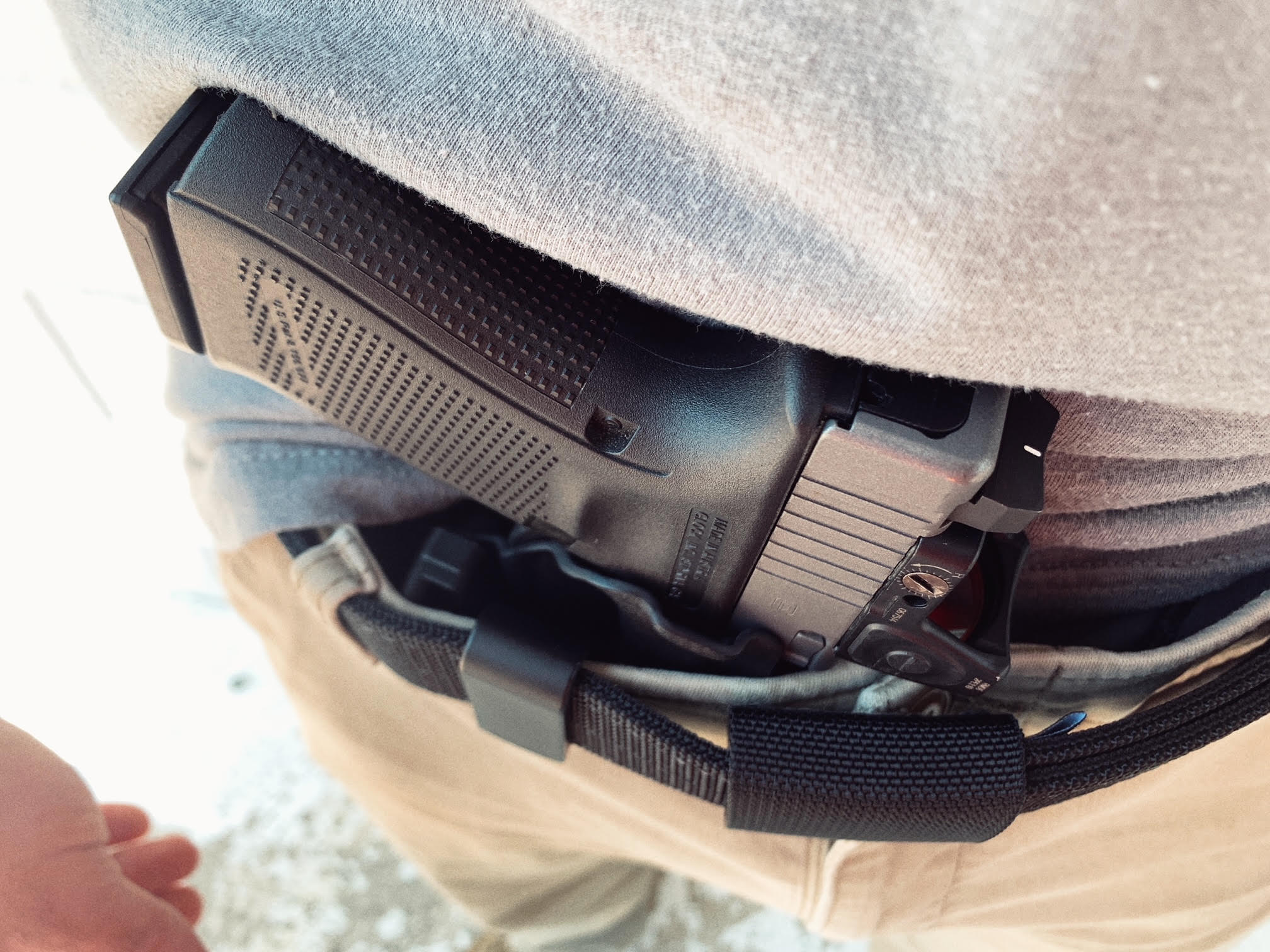
Why Holster Claw Placement Matters
The location of a concealment claw is not arbitrary.
At Dara, the claw assembly is intentionally designed and strategically positioned in relationship to the belt attachment, ride height, cant angle and geometry of the holster.
That relationship is what allows the claw to make proper contact with the belt and create useful leverage.
If the claw is positioned too high, too low, too far forward or too far behind the belt attachment, the belt may not engage it correctly.
A claw that sits completely underneath the belt cannot do its job. A claw that barely contacts the edge of the belt may also provide considerably less leverage than intended.
This is why the design of a concealment holster cannot be reduced to simply attaching a plastic or aluminum piece near the trigger guard.
You Cannot Just Add a Holster Claw to Any Holster
A concealment claw should not simply be added to a holster that was never designed to use one.
This is one of the most common misunderstandings surrounding holster claws.
You may see aftermarket claws sold separately and assume that adding one to an existing IWB holster will automatically improve concealment. The problem is that the effectiveness of the claw depends on where it sits in relation to the rest of the holster.
At Dara Holsters, the claw assembly is designed as part of the holster rather than as an afterthought.
We consider the relationship between:
- The concealment claw
- The belt attachment
- Available ride height settings
- Cant angle
- Trigger guard geometry
- Retention hardware
- Holster body geometry
All of these components affect where the claw meets the belt and how efficiently it can rotate the firearm grip toward the body.
Do Not Drill a Hole Into Your Holster to Add a Claw
If your existing holster was not designed to accept a concealment claw, you should not simply drill a new hole into the holster and attach one.
The location of mounting holes on a properly designed holster is intentional. Drilling into a finished holster can potentially interfere with:
- Firearm retention
- Structural integrity of the holster
- Retention hardware placement
- Belt attachment hardware
- Trigger guard coverage
- Ride height adjustment
- Cant adjustment
- Correct alignment between the claw and belt
Even if the claw physically attaches to the holster, that does not mean it will function correctly.
There is an important difference between a holster that was designed with a concealment claw and a holster that simply has a claw attached to it.
If your current holster was not engineered for a claw, the better option is to use a holster specifically designed around one.
For more information, read our dedicated article: Can I Put a Claw on My AIWB Holster to Help With Concealment?
Why the Belt Attachment and Claw Must Work Together
The belt attachment is the primary point securing the holster to the belt. The concealment claw needs to be positioned so the belt crosses the claw in the correct location.
If the two are improperly aligned, the belt cannot provide the pressure necessary for the claw to work effectively.
This becomes even more important on holsters with adjustable ride height and cant.
Changing the ride height alters how high or low the holster sits relative to the belt. Changing cant changes the angle of the holster. Both can affect the relationship between the claw and belt.
For this reason, Dara designs these components as part of a complete concealment system rather than treating each component independently.
Why a Good Gun Belt Matters With a Holster Claw
A concealment claw relies on resistance from the belt.
If the belt is extremely soft or flexible, it may simply bend outward when the claw presses against it. That reduces the amount of leverage available to rotate the firearm.
A sufficiently supportive belt provides a more stable surface for the claw to push against.
If your holster claw appears to be positioned correctly but is not producing the expected concealment effect, the belt is one of the first things you should evaluate.
Learn more in our article explaining why a good gun belt is important.
Can a Holster Claw Help Conceal a Full-Size Handgun?
Yes, a properly designed claw can help make larger firearms easier to conceal by rotating the grip closer toward the body.
That does not mean firearm size no longer matters.
Concealment is affected by several factors, including:
- Grip length
- Slide and barrel length
- Overall firearm thickness
- Body shape
- Holster position
- Ride height
- Cant angle
- Belt tension and rigidity
- Cover garment
The claw simply gives the carrier another mechanical advantage for managing one of the most difficult areas to conceal: the firearm grip.
What Dara AIWB Customers Say About Concealment
Dara's AIWB Holster has accumulated more than 80 customer reviews from people carrying a wide variety of firearms.
Some of those reviews specifically address concealment and the claw or wing system.
In July 2024, Donald Vick praised the relationship between the clip and claw design, along with the molding and retention of the holster.
Dave Harrington also noted that the wing added stability to his AIWB setup.
Other customers have reported successfully concealing pistols that had printed noticeably in previous holsters.
Richard Constantini, for example, reported using an AIWB Holster with a 5-inch Smith & Wesson M&P and later a full-size HK VP9 after experiencing printing with other holsters.
These experiences demonstrate an important point: concealment is not determined solely by the size of the handgun. Holster geometry, claw design, belt attachment and positioning can substantially affect how the firearm sits against the body.
Customer Feedback From the Light-Bearing AIWB Holster
Light-bearing firearms create an additional concealment challenge because the weapon-mounted light increases the width and overall dimensions of the holster.
Dara's Light-Bearing AIWB Holster uses a concealment claw designed around the geometry required for supported firearm and weapon-light combinations.
Tony E., carrying a Glock 19, specifically reported:
"Claw keeps my Glock 19 nice and tight to my body. No printing whatsoever."
Other customers have reported successfully concealing larger setups, including an FNX-45 Tactical with a weapon light and optic and a Glock 40 MOS 10mm.
Customer experiences will vary based on firearm, equipment, body shape, clothing and carry position, but this feedback provides useful examples of how shooters are using claw-equipped AIWB holsters in real-world concealed carry.
Does Everyone Need or Prefer a Holster Claw?
No.
A concealment claw is a tool, not a requirement for every concealed carrier.
Different body shapes and carry positions respond differently to changes in holster geometry. Some people experience a significant reduction in printing with a claw, while others may prefer less aggressive claw engagement or a different holster configuration.
That is one reason adjustability is valuable.
The best concealment setup is the one that works with your particular firearm, body type, clothing, belt and preferred carry position.
Holster Claw vs. Holster Wedge: What's the Difference?
A holster claw and a holster wedge are both concealment aids, but they work differently.
A claw primarily interacts with the belt. It creates leverage that rotates the firearm grip inward toward the body.
A wedge primarily interacts with the body. It is generally positioned on the lower body-facing portion of the holster and can change the angle at which the upper portion of the firearm sits against the wearer.
In simple terms:
- Claw: helps rotate the grip toward the body using the belt.
- Wedge: changes holster angle using pressure against the body.
Some concealed carriers use one, some use the other, and some concealment systems use both concepts.
Holster Claw vs. Holster Wing
The terms claw and wing are often used interchangeably in the concealed carry industry.
Different manufacturers use different names and designs, but both generally describe a device intended to contact the belt and help rotate the firearm grip toward the wearer's body.
At Dara Holsters, we use the term Grip Concealment Claw because it clearly describes the intended function of the component.
Seeing a Concealment Claw in Use
The effect is easier to understand when you see how the firearm sits against the body.
|
|
|
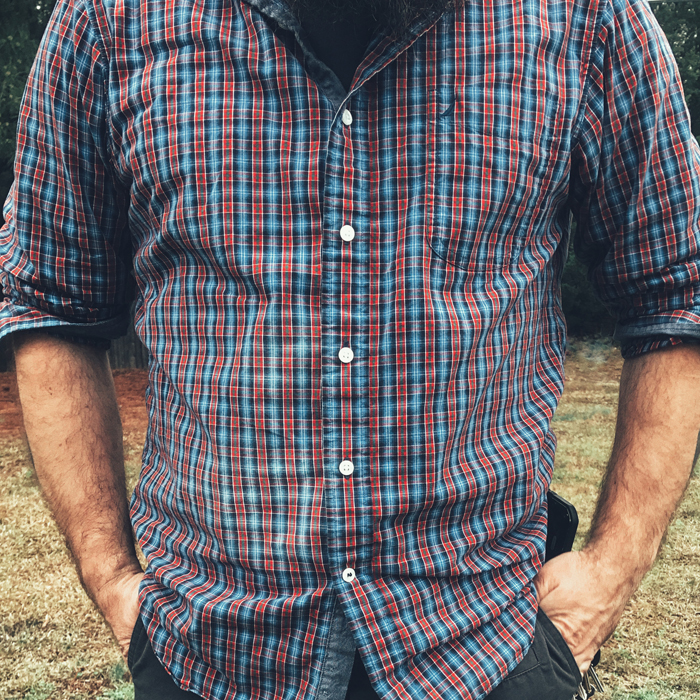
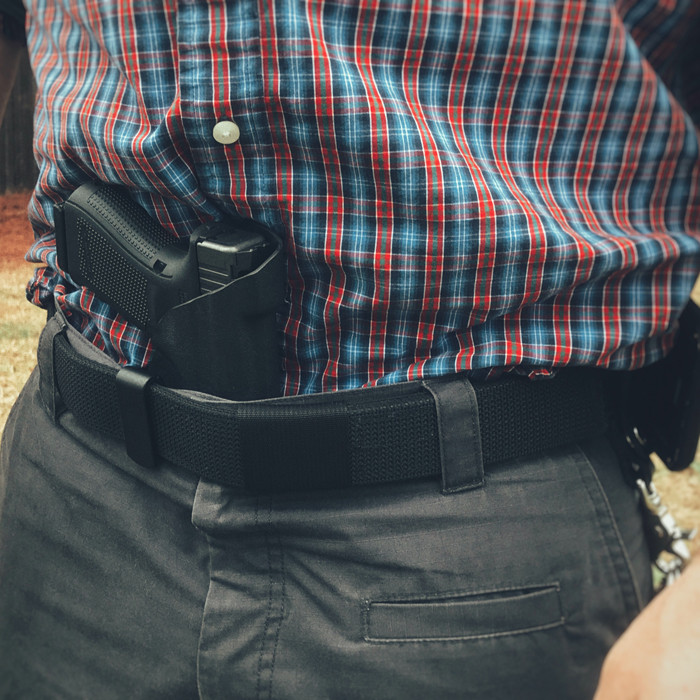
Jon is appendix carrying a Glock 19 in a Dara AIWB configuration. Notice how the grip sits close to the body instead of projecting outward.
The claw contributes to that position by using the belt as a leverage point.
How Dara's Concealment Design Has Evolved: The DCS
The basic mechanical principle behind the concealment claw remains useful, but modern holster design allows us to integrate that principle into a much more complete system.
The Dara Concealment System (DCS) represents the next evolution of Dara's concealed carry platform.
Rather than designing a holster around only one carry position, the DCS uses one core holster body that can be configured multiple ways.
What Is the Dara Concealment System?
The DCS is a 4-in-1 convertible concealment system that can be configured for:
- Appendix Inside the Waistband (AIWB)
- Strong-Side Inside the Waistband (IWB)
- Appendix Rig with a detachable magazine carrier
- Concealable Outside the Waistband (OWB)
The system uses the same firearm-specific holster body while allowing the user to change the carry configuration.
Each DCS is made for the firearm selected when ordering and is fit tested for that configuration before shipment.
The DCS Billet Aluminum Concealment Claw
The DCS uses a billet aluminum concealment claw designed as part of the complete concealment system.
This is important because the claw is not simply an accessory bolted onto a finished holster.
Its location and geometry are designed around the DCS belt attachments and the system's available adjustments.
The DCS allows adjustment of:
- Ride height
- Cant angle
- Sweat shield configuration
- Carry position
Because these variables affect how the holster sits relative to the belt and body, the concealment claw needs to work with them rather than independently from them.
This is the same design principle discussed earlier in this article: the claw, belt attachment and holster geometry need to function together as a system.
Why the DCS Takes a System-Based Approach to Concealment
There is more to concealing a firearm than adding a claw.
The position of the firearm is affected by the interaction between the holster shell, belt attachments, claw, ride height, cant, firearm dimensions and the wearer's body.
The DCS was designed around the idea that these factors should be adjustable within the same platform rather than forcing the user to purchase an entirely different holster whenever their preferred carry position changes.
The DCS appendix-rig configuration also includes a detachable hybrid magazine carrier constructed from Tegris and Squadron materials.
Learn more about the Dara Concealment System.
What DCS Customers Are Saying
The DCS has also generated customer feedback specifically related to comfort, fit and versatility.
Louis Custidero reported purchasing the system after receiving a recommendation from an instructor at Staccato Ranch. He specifically noted the thin profile and spacing between the holster and magazine carrier belt clips as contributing to comfort while seated.
Another customer, Fallen Hurd, highlighted the system's ability to switch between different preferred carry styles.
That type of feedback supports one of the main reasons the DCS was developed: concealed carriers do not always use one firearm, one body position or one carry configuration for every situation.
How to Tell if Your Holster Claw Is Working Correctly
If your AIWB holster has a claw but you're still experiencing excessive grip printing, check the system methodically.
1. Check Belt Contact
Put the holster on your belt and verify that the claw actually sits behind the belt.
If the claw does not contact the belt, it cannot create useful leverage.
2. Check Your Belt
If the claw is properly positioned but the belt simply bends outward, the belt may not provide enough support.
3. Check Ride Height
Changing ride height changes how the holster sits relative to the belt and body. Experiment with available adjustments within the manufacturer's intended configuration.
4. Check Cant
Cant changes the angle of the firearm and may affect how the grip lies against your torso.
5. Check Holster Position
Moving an AIWB holster even a relatively small distance around the waist can change how the firearm interacts with the natural contours of the body.
6. Evaluate the Entire Setup
Firearm size, belt, clothing and body type all contribute to concealment. A claw cannot compensate for every other variable.
Frequently Asked Questions About Holster Claws
What is a holster claw?
A holster claw is a concealment device commonly used on AIWB and IWB holsters. It contacts the belt and helps rotate the grip of the firearm toward the wearer's body to reduce printing.
What does a holster claw do?
A holster claw uses leverage from the gun belt to rotate the firearm grip closer toward the body. Its primary purpose is concealment, not firearm retention.
Does a holster claw help prevent printing?
Yes. Reducing grip printing is the primary purpose of a concealment claw. Results depend on the holster design, claw position, belt, firearm, body shape, clothing and carry position.
Can I buy a holster claw and add it to any holster?
No. A concealment claw should only be installed on a holster designed to accept that claw assembly. At Dara, claw location is intentionally designed around the belt attachment, ride height, cant angle and overall holster geometry so the claw properly contacts the belt and creates the intended leverage.
Can I drill a hole in my holster to install a claw?
We do not recommend it. If a holster was not designed for a concealment claw, drilling additional mounting holes can interfere with retention, hardware placement, structural integrity, trigger guard coverage and the intended geometry of the holster. Even if the claw can physically be attached, it may not align correctly with the belt and may not function as intended.
Why does claw location matter?
The claw needs to contact the belt in the proper location to create leverage. Its position therefore needs to be coordinated with the belt attachment, ride height, cant and overall holster geometry.
Why isn't my holster claw working?
First check whether the claw actually contacts the belt. If it does, evaluate belt rigidity, ride height, cant, holster position and the size and geometry of the firearm. A claw cannot work effectively if the belt does not engage it properly.
Do I need a stiff gun belt for a holster claw?
A sufficiently supportive belt generally allows a concealment claw to work more effectively because the belt needs to resist the pressure from the claw rather than simply flexing away from it.
Can I remove a holster claw?
Some concealment holsters are designed with removable claws. Whether the holster remains appropriate for another carry configuration after removal depends on the specific holster design. Follow the manufacturer's intended configuration.
Is a holster claw comfortable?
Comfort varies by user. Body shape, firearm size, claw geometry, belt tension and holster position all influence how the claw feels. Some carriers prefer more aggressive claw engagement while others prefer less.
Is a larger holster claw better?
Not necessarily. A larger or more aggressive claw can create additional leverage, but more pressure is not automatically better. Proper geometry, placement and belt contact matter more than size alone.
Can a holster claw help conceal a full-size handgun?
Yes. A claw can help rotate the grip of a larger handgun toward the body, which may reduce printing. Overall concealability will still depend on firearm dimensions, body type, clothing and the rest of the carry setup.
What's the difference between a holster claw and a wing?
The terms claw and wing are commonly used for concealment devices that serve the same general purpose: contacting the belt and helping rotate the firearm grip toward the body. Exact designs vary between manufacturers.
What's the difference between a holster claw and a wedge?
A claw primarily uses pressure against the belt to rotate the firearm grip inward. A wedge primarily presses against the body to change the angle of the holster. They address concealment in different ways and can sometimes be used together.
Do light-bearing AIWB holsters use concealment claws?
Yes, many do. Weapon-mounted lights change the width and geometry of the holster, so the claw and attachment system must be designed around the specific light-bearing holster configuration.
Does the Dara Concealment System have a claw?
Yes. The Dara Concealment System uses a billet aluminum concealment claw integrated into its modular design. The DCS can be configured for AIWB, strong-side IWB, an appendix rig with magazine carrier, or concealable OWB carry.
Is a holster claw necessary for appendix carry?
No. A claw is a concealment aid, not a requirement for appendix carry. Many carriers benefit from one, but the ideal setup depends on the firearm, body type, holster position, belt and personal preference.
How to Get the Most From a Holster Claw
A concealment claw works best when the rest of the concealed carry system works with it.
If you're trying to reduce printing, consider the complete setup:
- Use a holster specifically designed around its concealment claw.
- Make sure the claw properly contacts the belt.
- Use a sufficiently supportive gun belt.
- Experiment with the manufacturer's available ride height settings.
- Adjust cant where appropriate.
- Try slightly different positions around the appendix area.
- Consider your firearm's grip length and overall dimensions.
- Evaluate your cover garment.
- Consider whether a properly designed wedge would complement the claw.
Small changes in holster position and geometry can make a noticeable difference because the firearm, holster, belt and body all interact with one another.
The Bottom Line: A Holster Claw Is Part of a System
A holster claw is much more than a piece of material attached near the trigger guard.
It is a mechanical concealment device designed to work with the belt, belt attachment and geometry of the holster to help rotate the firearm grip toward the body.
That is also why you should not assume that an aftermarket claw can simply be bolted or drilled onto any existing holster.
At Dara Holsters, the claw location is intentionally designed around the belt attachment, available ride height, cant and holster geometry so those components work together.
Modern systems such as the Dara Concealment System take that concept even further by integrating the concealment claw into a modular platform with adjustable ride height, cant and multiple carry configurations.
Whether you're using a traditional Dara AIWB Holster, a Light-Bearing AIWB Holster, or the Dara Concealment System, the important principle remains the same:
Effective concealment comes from designing the holster, claw, belt attachment and firearm position to work together—not from treating the claw as a standalone accessory.