
1911 Holster Compatibility Guide: Why Not Every 1911 Fits the Same Holster
Posted by Dana Dara on Sep 22, 2026
One of the most common questions we receive about 1911 holsters is also based on one of the biggest misconceptions about the platform:
"It's a 1911. Shouldn't it fit any 1911 holster?"
No.
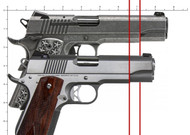
The 1911 has been around for more than a century, but the modern 1911 market looks very different from the original pistol. Today, dozens of manufacturers produce pistols based on the 1911 design in different barrel lengths, calibers, frame sizes, slide profiles, dust-cover shapes, rail configurations and double-stack configurations.
You can find 1911 and 1911-style pistols with barrels around 3", 3.5", 4", 4.25", 5" and 6". You can find traditional non-railed frames, half rails, full accessory rails and extended dust covers. There are single-stack and double-stack pistols. There are also significant differences in trigger guards and slide geometry.
From a holster manufacturer's perspective, these differences matter. They create chaos before and after a purchase.
Dara Holsters manufactures rigid, firearm-specific Kydex and Boltaron holsters. Our holsters are formed around specific firearm geometry. A seemingly minor dimensional difference can determine whether a firearm seats properly, where it contacts the holster, how much force is required to draw it and whether the retention system functions as designed.
This guide explains what actually determines 1911 holster fit, what "Mil-Spec 1911" means, why dust-cover shape matters, and why Dara only lists 1911 configurations we have physically evaluated and can support.
Are All 1911 Holsters the Same?
No. There is no single modern "1911 shape" that covers every pistol sold as a 1911.
Two pistols may both be called a 1911 and have the same barrel length while still having different external dimensions.
Holster fit can be affected by:
- Barrel and slide length
- Slide width and exterior profile
- Frame dimensions
- Dust-cover shape
- Dust-cover length
- Accessory rail configuration
- Trigger guard shape and dimensions
- Muzzle profile
- Controls and safeties
- Optic size and mounting position
- Weapon-mounted lights
- Aftermarket modifications
More importantly, the location of a dimensional difference matters.
A difference in an area that never contacts the holster may have no effect on fit. A much smaller difference at the dust cover, trigger guard or another point where the holster indexes or applies retention can make the pistol incompatible.
What Does "Mil-Spec 1911" Mean?
Mil-spec is short for military specification.
In general 1911 terminology, the term is commonly used to describe a pistol that follows, or closely resembles, the traditional military-pattern 1911 configuration.
That does not mean every commercial pistol advertised as "mil-spec" is dimensionally identical.
Terms such as 1911, Mil-Spec, GI, Government and Commander are useful descriptions of a general platform or size, but they should not be treated as universal holster-fit specifications.
Different manufacturers can make changes to the frame, slide, trigger guard, dust cover and other external surfaces while still producing a pistol that is unmistakably a 1911.
When Dara lists a Mil-Spec 1911 .45 Non-Railed option, we are referring to the specific traditional non-railed geometry that our holster was developed and tested around.
It does not mean that Dara guarantees every handgun described by its manufacturer as a "mil-spec 1911" will fit that holster.
Government, Commander and Officer 1911s: What Do the Names Mean?
You'll frequently see 1911s described using terms such as Government, Commander and Officer or Officer-style.
In general, these names describe different size classes of the 1911 platform:
- Government: traditionally associated with the full-size 5" 1911
- Commander: traditionally associated with a shorter approximately 4.25" pistol
- Officer / compact: generally refers to substantially shorter compact 1911 configurations, often around the 3" to 3.5" range
Those terms are useful for understanding the general size of the pistol, but they still do not establish holster compatibility.
For example, Colt's Combat Commander uses a 4.25" barrel, but simply calling another manufacturer's pistol a "Commander-size 1911" does not establish that its dust cover, trigger guard and slide dimensions match the Colt.
1911 Barrel Lengths Vary More Than Many People Realize
Modern 1911-style pistols can be found in numerous lengths, including:
- 3"
- 3.5"
- Approximately 4"
- 4.25"
- Approximately 4.3"
- 5"
- 6"
This alone makes the idea of a universal 1911 holster problematic.
A 3" compact pistol and a 6" long-slide pistol are both members of the 1911 family, but there can be roughly three inches of difference in barrel length before we even start comparing the frame.
More importantly, two 5" 1911s are not necessarily compatible with the same holster.
A Visual Comparison of Modern 1911 Variations
The table below is intended to put the size of the modern 1911 market into perspective. It includes representative pistols and product families from major 1911 manufacturers.
This is not a Dara Holsters compatibility chart. A firearm appearing in this table does not mean Dara manufactures a holster for it. It also does not mean two firearms sharing the same barrel length, caliber or rail type will fit the same holster.
| Manufacturer / Model or Family | Typical Barrel Length | Caliber(s) | Rail / Dust-Cover Configuration |
|---|---|---|---|
| Traditional / GI-pattern 1911 | 5" | .45 ACP | Non-railed, traditional dust cover |
| Colt Government Model | 5" | .45 ACP / other variants | Traditional non-railed |
| Colt Competition | 5" | .45 ACP / 9mm variants | Traditional non-railed |
| Colt Combat Commander | 4.25" | .45 ACP / 9mm | Traditional non-railed |
| Colt Lightweight Commander | 4.25" | .45 ACP / 9mm variants | Traditional non-railed |
| Colt Defender | 3" | .45 ACP / 9mm variants | Compact non-railed configuration |
| Springfield Armory Mil-Spec | 5" | .45 ACP | Traditional non-railed |
| Springfield Armory Garrison | 5" / 4.25" | .45 ACP / 9mm variants | Non-railed |
| Springfield Armory Ronin | 5" / 4.25" / compact variants | .45 ACP / 9mm | Primarily traditional non-railed configurations |
| Springfield Armory Operator | 5" / 4.25" variants | .45 ACP / 9mm variants | Accessory rail |
| Springfield Armory TRP Classic | 5" / 4.25" | .45 ACP | Non-railed |
| Springfield Armory TRP Rail | 5" | .45 ACP | Picatinny rail |
| Springfield Armory TRP Carry Contour | 4.25" | .45 ACP | Configuration differs from standard Government frame |
| Springfield Armory Emissary | 4.25" / 5" | .45 ACP / 9mm | Full-length dust-cover / rail configurations; squared trigger guard |
| Springfield Armory 1911 DS Prodigy | 4.25" / 5" | 9mm | Railed, double-stack frame |
| Kimber Custom family | 5" | .45 ACP / 9mm variants | Generally non-railed; model dependent |
| Kimber Pro family | 4" | .45 ACP / 9mm variants | Model dependent |
| Kimber Ultra family | 3" | .45 ACP / 9mm variants | Compact; model dependent |
| Kimber Warrior family | 5" | .45 ACP | Railed configuration |
| Ruger SR1911 Government | 5" | .45 ACP / 10mm variants | Traditional configuration; model dependent |
| Ruger SR1911 Commander | 4.25" | .45 ACP / 9mm variants | Non-railed variants |
| Ruger SR1911 Officer-Style | 3.6" class | .45 ACP / 9mm variants | Compact configuration |
| Smith & Wesson SW1911 | 5" | .45 ACP | Model dependent |
| Smith & Wesson SW1911Sc / Commander | 4.25" | .45 ACP | Commander-size configuration |
| SIG Sauer 1911 Traditional | 5" | .45 ACP | Model dependent |
| SIG Sauer 1911X | 4.25" | .45 ACP | Modernized 1911 configuration |
| Magnum Research Desert Eagle 1911G | 5" | .45 ACP / 9mm variants | Government-size configuration |
| Magnum Research Desert Eagle 1911C | 4.33" | .45 ACP / 9mm variants | Commander-size configuration |
| Magnum Research Desert Eagle 1911U | 3" | .45 ACP | Compact configuration |
| Rock Island Armory GI Full Size | 5" | .45 ACP / 9mm / other variants | Traditional GI-style configuration |
| Rock Island Armory Mid Size | Approximately 4.25" | .45 ACP / 9mm / other variants | Model dependent |
| Rock Island Armory Compact | Approximately 3.5" | .45 ACP / 9mm variants | Compact configuration |
| Rock Island Armory TAC Ultra | Various | .45 ACP / 9mm / 10mm / .40 S&W variants | Railed configurations available |
| Rock Island Armory Match / Long Slide | 5" / 6" | .45 ACP / 9mm / .40 S&W variants | Standard and railed configurations exist |
| Dan Wesson Valor | 5" / Commander variants | .45 ACP / 9mm variants | Generally non-railed; model dependent |
| Dan Wesson Specialist | 5" / Commander variants | .45 ACP / 9mm variants | Railed duty configuration |
| Dan Wesson Guardian | Commander class | .45 ACP / 9mm variants | Non-railed |
| Wilson Combat CQB | 5" / compact variants | .45 ACP / 9mm and other variants | Rail optional depending on configuration |
| Wilson Combat Professional | Approximately 4" | .45 ACP / 9mm variants | Rail configuration varies |
| Wilson Combat EDC X9 | 4" class | 9mm | Optional rail; double-stack 1911-style platform |
| Nighthawk Custom Government-size 1911s | 5" | .45 ACP / 9mm / other variants | Model dependent |
| Nighthawk Custom Commander-size 1911s | 4.25" class | .45 ACP / 9mm variants | Model dependent |
| Tisas Government / Duty 1911s | 5" | .45 ACP / 9mm variants | Non-railed and railed models exist |
| Tisas Carry 1911s | 4.25" | .45 ACP / 9mm variants | Non-railed and railed models exist |
| Tisas Raider | 5" | .45 ACP | Railed duty-style configuration |
| Tisas Night Stalker | Various | 9mm / .45 ACP variants | Railed configuration |
That table illustrates the real problem: "1911" describes a platform family, not one universal set of exterior dimensions.
You can have two 5" .45 ACP 1911s where one has a traditional smooth dust cover and the other has a Picatinny rail. You can have two 4.25" pistols where one has a traditional rounded trigger guard and another has a squared trigger guard and extended dust cover.
Those differences can matter more to holster fit than the barrel-length number printed on the specification sheet.
The Dust Cover is an Important Areas for 1911 Holster Fit
If you want to understand why one 1911 fits a holster and another doesn't, look underneath the front of the slide.
The dust cover is the forward portion of the frame located in front of the trigger guard and underneath the slide.
On a traditional non-railed 1911, the dust cover has the familiar smooth profile of the classic pistol.
Modern 1911 manufacturers have changed this area considerably.
A modern 1911 can have:
- A traditional smooth, non-railed dust cover
- A shortened dust cover
- A thicker or heavier dust cover
- A half or partial rail
- A Picatinny accessory rail
- A full-length dust cover
- A proprietary rail profile
That matters because a rigid holster is molded around the outside of the firearm.
 |
 |
How Dust-Cover Shape Can Make a 1911 Not Fit
Consider two 5" .45 ACP 1911s.
From a distance, they may look nearly identical. Both have 5" barrels. Both are chambered in .45 ACP. Both use the familiar 1911 controls and grip angle.
But one has a traditional non-railed dust cover and the other has a larger railed dust cover.
A holster formed closely around the traditional frame may not have enough internal clearance for the larger rail.
The railed pistol might begin entering the holster and then stop before it reaches the intended seated position.
Another pistol may technically enter the holster but rub heavily against an area that was never intended to provide retention.
That is not what Dara considers a confirmed fit.
"It goes into the holster" and "it fits the holster correctly" are two different things.
Springfield's Emissary Is a Good Example
The Springfield Armory Emissary demonstrates how much a modern 1911 can depart from traditional external geometry while remaining a 1911.
Some current Emissary configurations use a full-length dust cover with a section of Picatinny rail and a distinctive squared trigger guard.
Compare that with a traditional rounded-trigger-guard, non-railed Government-style 1911 and it becomes obvious why barrel length alone cannot establish holster compatibility.
Railed and Non-Railed 1911s Are Not Automatically Interchangeable
A traditional non-railed 1911 and a railed 1911 should not automatically be expected to use the same molded holster.
The rail changes the shape and dimensions of the frame in an area that can directly contact the holster.
Even saying "railed 1911" is not specific enough.
Different pistols can have different rail lengths, rail profiles and dust-cover geometry.
This is why Dara treats our supported Operator/TRP half-rail configuration separately from our Mil-Spec non-railed 1911 configuration.
Trigger Guard Shape Can Matter Too
The trigger guard is another important area because many passive-retention holsters use geometry near the trigger guard as part of their retention system.
Traditional 1911s generally have the familiar rounded trigger-guard profile. Some modern pistols use enlarged, undercut or squared trigger guards.
If the holster was molded around one geometry, a significantly different trigger guard can change how the firearm enters, seats and retains.
Again, the barrel can be exactly the same length while the holster fit is completely different.
 |
 |
Slide Geometry Can Change Holster Fit
Not every modern 1911 uses exactly the same exterior slide profile either.
Manufacturers now use different slide contours, flats, serrations and other dimensional changes.
Some pistols remain very close to the traditional profile. Others have noticeably different exterior geometry.
Whether a particular difference matters depends on where and how the holster contacts the slide.
 |
 |
Does 1911 Caliber Determine Holster Fit?
No.
Caliber is useful for identifying the exact firearm, but caliber alone does not determine the exterior dimensions of the pistol.
The modern 1911 family has included pistols chambered in:
- .45 ACP
- 9mm
- 10mm Auto
- .40 S&W
- .38 Super
- .22 TCM
- and other chamberings
Two pistols chambered in different calibers may have sufficiently similar external dimensions for a particular holster. Two pistols chambered in the same caliber may have substantially different external geometry.
Therefore, "I have a .45 1911" still isn't enough information to determine holster fit.
What About Double-Stack 1911s?
The modern market has added another layer of confusion: double-stack 1911 and 1911-derived pistols.
The Springfield Armory 1911 DS Prodigy is a good example.
The Prodigy uses familiar 1911 architecture and controls but combines them with a double-stack magazine system, polymer grip module and a different modern frame configuration.
Dara offers holsters for the Springfield Armory Prodigy 4.25" and 5", but we treat the Prodigy as its own firearm configuration.
A 4.25" Prodigy should not be assumed to fit a holster simply because that holster is advertised for a 4.25" 1911.
Likewise, a traditional 4.25" single-stack 1911 should not be assumed to fit a Prodigy holster.
Which 1911s Does Dara Holsters Support?
Dara intentionally maintains a limited 1911 compatibility list rather than advertising a universal 1911 holster.
These are the primary 1911 and 1911-style configurations we currently accommodate:
| Dara Firearm Configuration | Barrel Length | Rail Configuration | Compatibility Notes |
|---|---|---|---|
| Mil-Spec 1911 .45 | 3.5" | Non-railed | Traditional non-railed configuration |
| Mil-Spec 1911 .45 | 4.25" | Non-railed | Also accommodates confirmed Colt Commander and Kimber configurations |
| Mil-Spec 1911 .45 | 5" | Non-railed | Traditional full-size configuration |
| 1911 Operator / TRP | 4.25" & 5" | Half-Rail / Railed Configuration | Separate configuration from our non-railed Mil-Spec 1911 |
| Springfield Armory 1911 DS Prodigy | 4.25" & 5" | Railed, Double-Stack Platform | Prodigy-specific holster configuration |
This list is important. If another 1911 happens to share one of these barrel lengths, that does not automatically mean it fits the corresponding Dara holster.
If your exact firearm is not listed, contact Dara before ordering rather than selecting the closest-looking 1911 from the dropdown.
How Dara Determines Whether a 1911 Actually Fits
When we evaluate a firearm for holster compatibility, we're looking for more than whether the pistol physically goes inside the holster.
We evaluate how the firearm enters the holster, where it makes contact, whether it reaches its intended seated position, how the retention engages and how consistently the pistol releases during the draw.
A pistol that stops short, binds against the wrong surface or produces excessive draw resistance is not a correct fit just because we can force it into the holster.
Dara Uses Draw-Weight Testing to Evaluate Holster Fit
One of the tools Dara uses when evaluating holster fit and retention is draw-weight testing.
Draw weight is the amount of force required to remove the firearm from the holster.
This gives us a measurable way to evaluate retention and draw resistance instead of relying entirely on someone saying that a holster "feels tight" or "feels loose."
This is particularly useful when evaluating firearms that appear dimensionally similar.
For example, imagine that a different 1911 physically enters an existing holster but has a slightly wider or differently shaped dust cover. That dust cover may create additional friction against the holster body.
The firearm technically "fits inside," but the extra contact can change the amount of force required to draw it.
The opposite problem can occur as well. If a dimensional difference reduces engagement at an intended retention point, the firearm may have less retention than the holster was designed to provide.
Being able to insert the firearm is therefore only the beginning of our evaluation.
Why Physical Fit Testing Matters More Than Comparing Specification Sheets
Manufacturer specifications such as overall length, height, width and barrel length are useful, but they do not tell us everything required to manufacture a firearm-specific holster.
Suppose two pistols are both listed as being approximately the same overall width.
That measurement does not tell us where the widest point occurs.
One pistol could be wider at a grip panel that never enters the holster. Another could have additional width at the dust cover, exactly where the holster wraps tightly around the frame.
The specification sheet might make the pistols look nearly identical.
The holster may tell a completely different story.
That is why Dara relies on actual firearm geometry and physical fit evaluation rather than declaring compatibility based only on published measurements.
Every Dara Holster Is Fit Tested Before Shipment
Fit testing doesn't stop after we develop a mold.
Every Dara holster is fit tested before it ships.
Our manufacturing process is designed to produce repeatable results, but we still inspect and test the completed holster before sending it to the customer.
The holster is checked to verify that the intended firearm seats correctly and that retention functions as expected.
This is especially important with thermoformed Kydex and Boltaron holsters because the finished geometry is created through heating, forming, cooling, trimming, assembly and finishing.
The mold may establish the geometry, but the finished holster is the product the customer actually receives.
That's why the finished holster gets tested.
Why Dara Does Not Claim "Fits All 1911s"
It would be much easier to put "Fits All 1911s" on a product page.
It would also be inaccurate.
There are simply too many 1911 variations on the market for us to assume compatibility based on the name alone.
Our approach is to tell customers what we have actually developed and tested rather than creating an enormous list of firearms that look similar enough that they might fit.
If we haven't confirmed a configuration, we don't want the customer relying on an assumption.
Will a 4.25" 1911 Fit a 5" 1911 Holster?
Sometimes, but barrel length alone cannot answer that question.
If the 4.25" and 5" pistols share the critical external dimensions used by that particular holster, the shorter pistol may be able to use the longer holster body and simply leave additional unused space at the muzzle.
But a longer holster cannot compensate for a different dust cover, rail, trigger guard or slide profile.
This is why cross-compatibility should be confirmed for the actual firearms involved.
Will a 5" 1911 Fit a 4.25" 1911 Holster?
Generally, a closed-bottom holster made to the shorter slide length will not provide enough room for the longer 5" slide and muzzle.
Holster construction varies, however, so always follow the compatibility information provided for the specific holster.
Will a Colt Commander Fit a 1911 Holster?
It depends on which 1911 holster.
Dara has confirmed supported Colt Commander configurations with our applicable 4.25" non-railed 1911 holster.
That should not be interpreted as a general rule that every pistol described as "Commander-size" fits the same holster.
Will a Kimber 1911 Fit a Standard 1911 Holster?
Some Kimber configurations have been confirmed with Dara's supported 1911 holster configurations.
Kimber has produced a large number of 1911 variants, however, including 3" Ultra, 4" Pro and 5" Custom-size pistols as well as models with differing frame and rail configurations.
Therefore, the name "Kimber 1911" alone is not enough to determine fit.
Will a Springfield Armory 1911 Fit a Standard 1911 Holster?
It depends entirely on the Springfield model.
A traditional Springfield Mil-Spec, a railed Operator, a TRP Rail, an Emissary and a double-stack Prodigy can all be described as members of the broader 1911 family, but their external configurations are not identical.
This is one of the clearest examples of why you should select a holster by exact firearm configuration rather than simply selecting "1911."
Does Adding a Weapon Light Make Different 1911s Compatible?
No.
A light-bearing holster is typically designed around the combined geometry of a particular firearm and weapon-mounted light.
The pistol's own frame and rail geometry still matter.
Installing the same light on two different railed 1911s does not automatically make those firearms interchangeable in the same light-bearing holster.
Do Optics Affect 1911 Holster Fit?
They can.
Dara's applicable modern holsters are designed with optic clearance, but the optic's size and mounting position can still matter depending on the firearm and holster configuration.
Aftermarket slides, optic cuts, compensators and other modifications can also change the external geometry used to determine holster compatibility.
How Do I Know Which 1911 Holster I Need?
Before ordering a rigid, firearm-specific 1911 holster, identify the firearm as precisely as possible.
- Manufacturer: Who actually made the pistol?
- Exact model: Don't stop at "1911."
- Barrel length: 3", 3.5", 4", 4.25", 5", 6", etc.
- Caliber: .45 ACP, 9mm, 10mm, etc.
- Rail: Is the frame railed or non-railed?
- Dust cover: Traditional, extended, full-length or another configuration?
- Trigger guard: Traditional rounded shape or another design?
- Weapon light: If installed, what exact model?
- Optic: If installed, what configuration?
- Modifications: Has the slide, frame, muzzle or another external component been changed?
Then compare that information with the actual firearms listed for the holster.
Do not simply select whichever 1911 has the closest barrel length.
1911 Holster Frequently Asked Questions
Do all 1911s fit the same holster?
No. Modern 1911s differ in barrel length, frame geometry, dust-cover shape, rails, trigger guards, slide profiles and other external dimensions.
Are all 5" 1911s the same size?
No. A 5" measurement describes barrel length, not every exterior dimension of the firearm. Two 5" 1911s can have substantially different frame and rail configurations.
Are all 4.25" Commander 1911s interchangeable?
No. "Commander" or "Commander-size" describes a general configuration and does not guarantee identical dimensions among manufacturers.
Are railed and non-railed 1911 holsters interchangeable?
Do not assume they are. Adding an accessory rail changes the external dimensions of the frame and dust-cover area.
Can two .45 ACP 1911s use the same holster?
Possibly, but caliber does not determine holster compatibility. The external geometry of the two pistols must also be compatible with that particular holster.
Can a 9mm 1911 use a .45 ACP 1911 holster?
Possibly, depending on the exact firearms and holster, but chambering alone cannot establish compatibility. Dara only guarantees configurations we have confirmed.
Is a Prodigy just a 1911 for holster purposes?
No. Dara treats the Springfield Armory 1911 DS Prodigy as its own holster configuration. We currently support Prodigy 4.25" and 5" configurations.
What if my 1911 isn't listed by Dara?
Contact us before ordering. Provide the manufacturer, exact model, barrel length, caliber, rail configuration and any accessories or modifications. We would rather verify the configuration than have you guess based on a similar-looking pistol.
The Bottom Line: "1911" Is a Platform, Not a Holster Fit Specification
The 1911 may be one of the most recognizable handgun designs ever made, but more than a century of development has produced an enormous number of variations.
Today's market includes everything from 3" compact pistols to 6" long-slide guns, traditional .45 ACP Government Models, 9mm Commanders, 10mm pistols, railed duty guns, full-length dust covers and modern double-stack platforms.
That is why the question "Will this fit a 1911?" usually needs another question:
"Which 1911?"
At Dara Holsters, compatibility is based on the firearm's actual geometry and our fit-testing standards, not simply the name stamped on the slide.
We evaluate how the firearm enters the holster, how it seats, how retention engages and the amount of resistance encountered during the draw. We also fit test every completed holster before shipment.
If your exact 1911 configuration is listed, choose that firearm when ordering. If it isn't listed, contact Dara before placing your order so we can determine whether we currently have a compatible holster.