
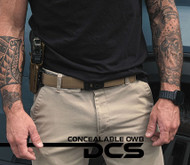
Concealable Holster Systems for Plainclothes Officers, Government Agents & Executive Protection
Posted by Dana Dara on Sep 01, 2026
Not every armed professional works from a uniformed duty belt.
Plainclothes law enforcement officers, government agents, investigators, executive protection personnel and armed security professionals may carry a firearm throughout the workday while needing to keep it discreetly concealed. Their equipment requirements are different from those of both a uniformed officer wearing a traditional duty holster and a typical everyday concealed carrier.
They need a professional concealment holster system: firearm-specific equipment that can be worn for extended periods, remain discreet beneath professional or casual clothing, provide consistent firearm fit and adapt to the requirements of the assignment.
The challenge is that those requirements do not always stay the same.
An agent may carry appendix inside the waistband under one clothing configuration and prefer strong-side IWB for another. A suit coat or jacket may make close-riding concealed OWB practical. One assignment may call for a spare magazine integrated into an appendix setup, while another may make more sense with the magazine carried separately.
Traditionally, changing between those configurations meant maintaining multiple holsters for the same firearm.
Dara developed the Dara Concealment System (DCS) around a different idea:
Keep the same firearm-specific holster body and change the way it is carried.
The DCS is a 4-in-1 convertible concealment system that can be configured as:
- Single-clip AIWB or IWB
- Dual-clip AIWB or IWB
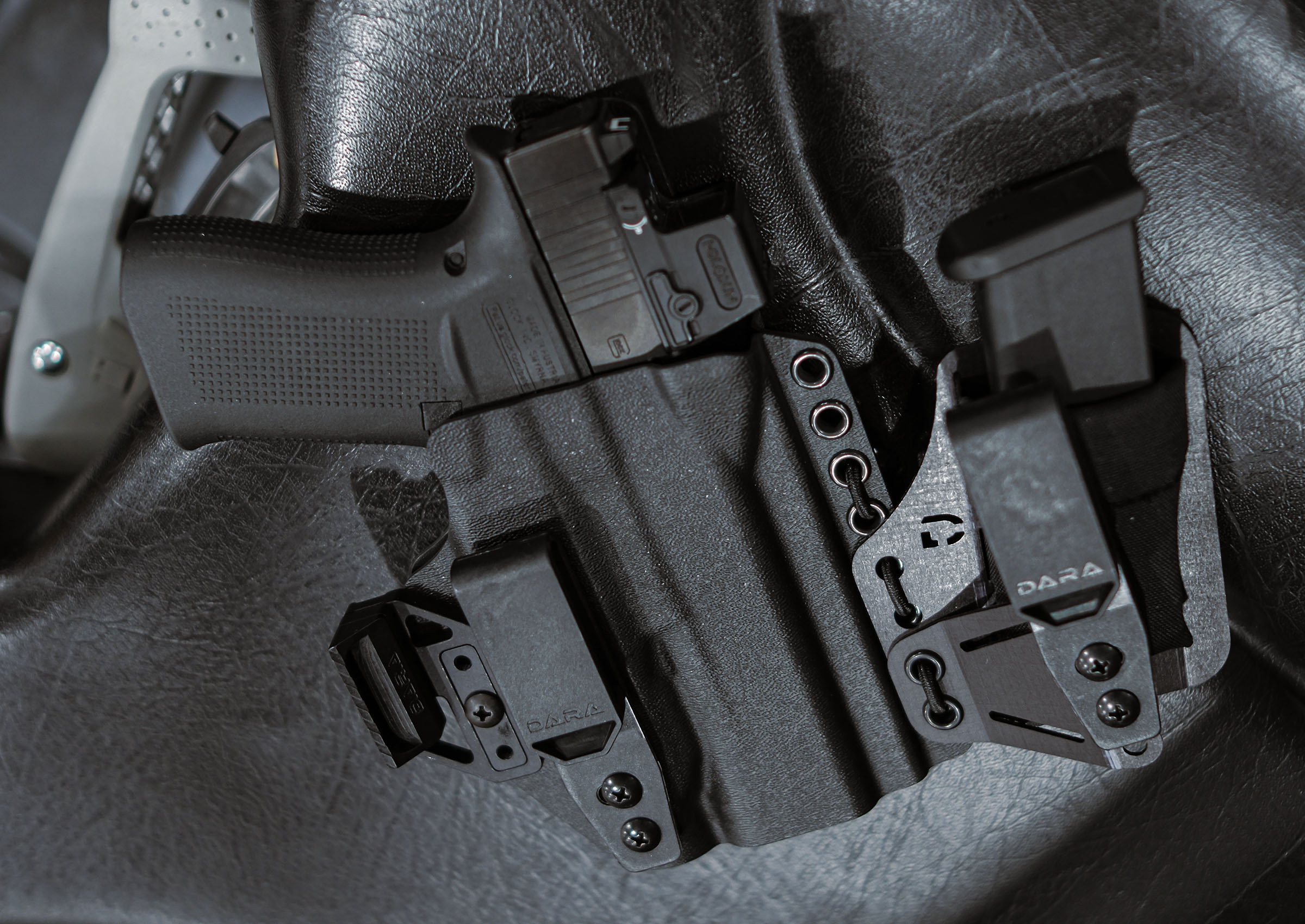
- Appendix rig with detachable magazine carrier
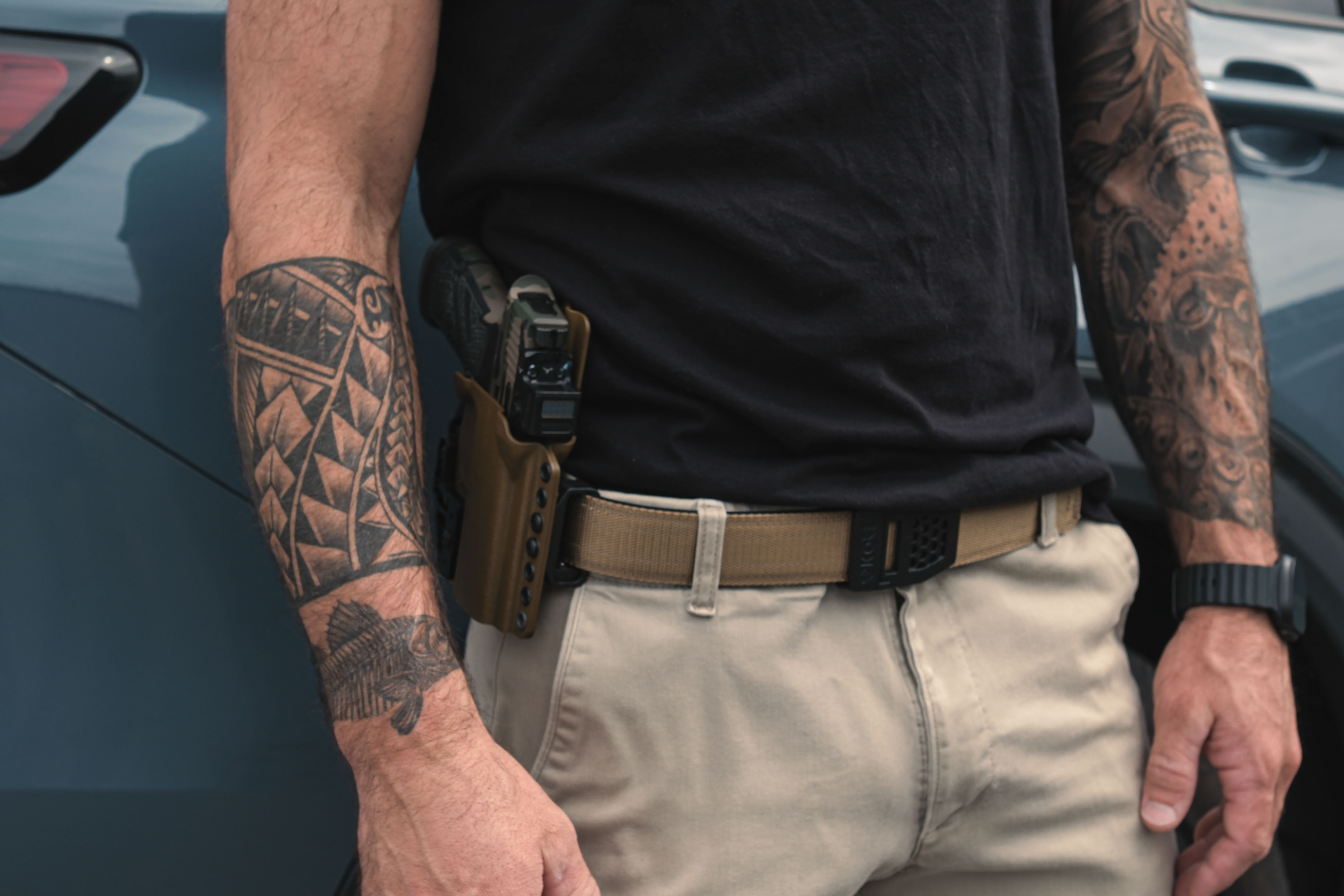
- Concealable OWB
The hybrid magazine carrier can also be removed from the appendix configuration and worn separately.

The primary holster body remains the same throughout these configurations. With the appropriate DCS components and a screwdriver, the system can be disassembled and reconfigured without permanently altering the holster.
For an individual professional, that means one concealment platform can adapt to different clothing and carry requirements.
For an agency or organization evaluating equipment for plainclothes or discreet armed personnel, it means one firearm-specific system can potentially cover several methods of concealed carry without issuing a completely separate holster for each configuration.
A Concealment Holster for On-Duty Plainclothes Carry
There is an important distinction between a duty holster and a concealment holster used while on duty.
A traditional duty holster is typically associated with uniformed, exposed carry and may be selected around specific active-retention requirements.
The DCS is not intended to replace that category of equipment.
It is a concealment system for situations in which an authorized armed professional needs the firearm to remain discreet.
That can include:
- Plainclothes law enforcement
- Government agents
- Investigators
- Executive protection personnel
- Protective details
- Armed security personnel
- Other professionals authorized to carry a concealed firearm as part of their work
The common requirement is not the user's job title.
It is the need to carry a firearm professionally while keeping it concealed.
Why Professional Concealed Carry Can Require More Than One Configuration
Someone who carries the same firearm in the same position with similar clothing every day may be well served by a conventional single-purpose concealment holster.
Professional users can face a different problem.
Clothing may change with the assignment. Personnel may move between vehicles, offices, public environments and protective details. Formal clothing may be required one day and casual clothing the next. The amount and type of cover garment available can also change.
Those variables can change which carry configuration works best without changing the firearm itself.
This is the problem the DCS was designed to solve.
Instead of asking:
“Which one concealment position should this holster be built for?”
the DCS was developed around another question:
“How many practical concealment configurations can we build around one properly fitted firearm holster?”
The result is a system that can transition between AIWB, IWB, an appendix rig and concealed OWB while retaining the same primary holster body.
One Holster Body, Four Ways to Carry
The defining feature of the DCS is not simply that different accessories can be attached to it.
The same firearm-specific holster body is used across the system's primary carry configurations.
Single-Clip AIWB or IWB
The DCS can be configured with a single belt clip for appendix or inside-the-waistband carry.
This provides a simple, low-profile setup for personnel who want a compact configuration with minimal hardware.
Dual-Clip AIWB or IWB
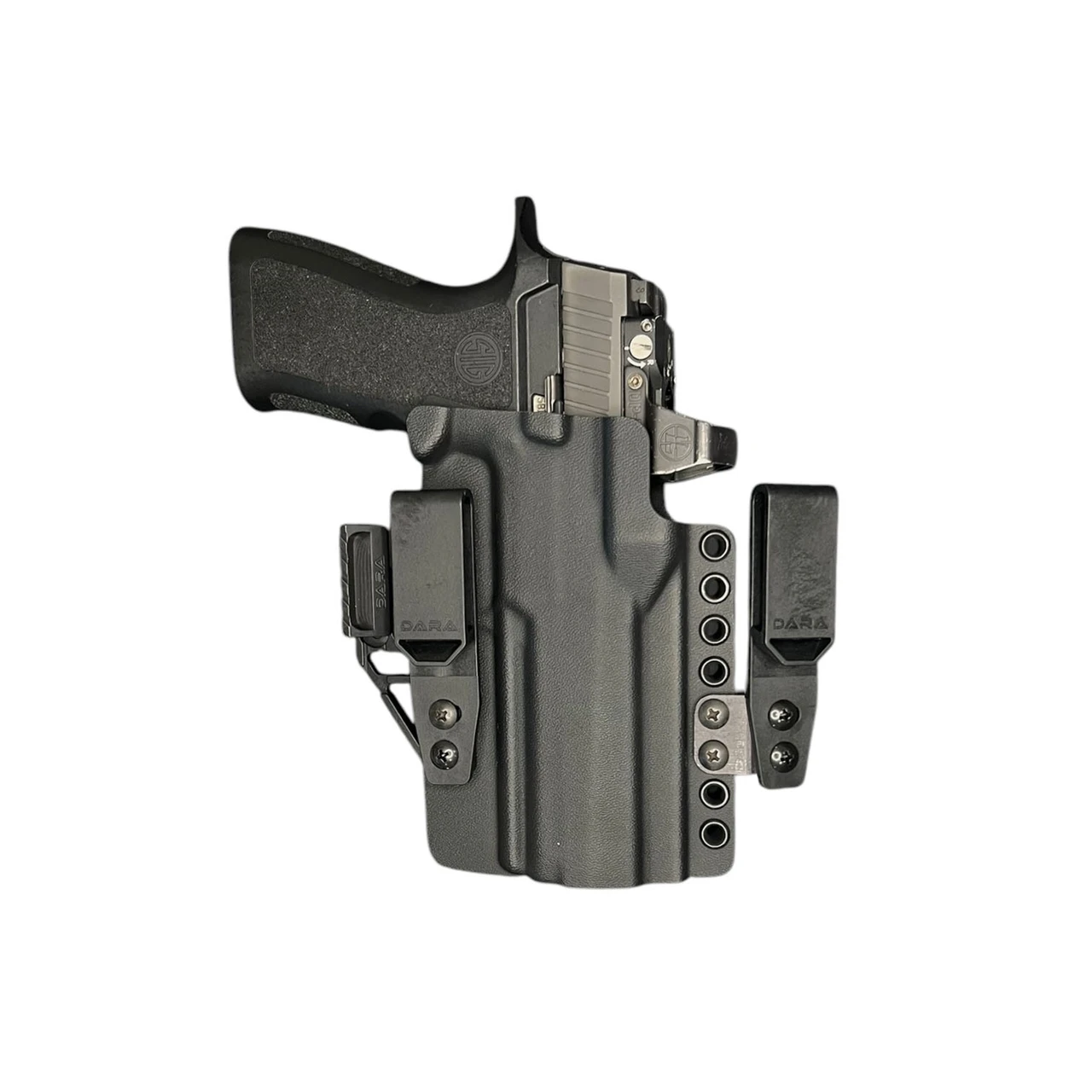
The same holster body can be configured with two belt clips for additional stability across the belt line.
This configuration can be used for appendix or other inside-the-waistband positions depending on the user's preferred setup.
Appendix Rig With Detachable Magazine Carrier

The DCS can also be configured as an integrated appendix rig by attaching the hybrid magazine carrier to the holster.
This allows the firearm and spare magazine to be carried together as one concealment system.
The connection is not permanent. If the user does not want an integrated appendix setup, the magazine carrier can be removed.
Separate Hybrid Magazine Carrier

The same hybrid magazine carrier used in the appendix rig can be detached and worn separately from the holster.
This allows the user to change how the spare magazine is carried without purchasing a separate dedicated carrier.
Concealable OWB

The DCS can also be converted to a close-riding outside-the-waistband configuration.
This can be useful when a jacket, suit coat, overshirt or other cover garment allows the firearm to be carried outside the waistband while remaining concealed.
The firearm-specific holster shell does not change.
The mounting configuration does.
Why the Same Holster Body Matters
Most multi-position carry solutions involve changing from one holster to another.
The DCS takes a different approach.
The primary firearm fit stays consistent because the firearm remains in the same holster body. Only the attachment and carry configuration change.
For professional users, this can simplify both personal equipment setup and agency standardization.
Instead of evaluating separate AIWB, IWB, appendix-rig and OWB holsters for the same firearm, an organization can evaluate one concealment platform capable of supporting multiple configurations.
Built for Personnel Whose Assignment Can Change
Executive protection, plainclothes law enforcement, investigative work and discreet government assignments can all create different concealment requirements.
A user may need deeper concealment under light clothing during one assignment and close-riding OWB under a jacket during another.
Vehicle-heavy work may also influence which position is most practical, while long periods of standing, walking or moving through public environments can create different preferences.
The DCS gives the user the ability to reconfigure the same firearm-specific holster around those changing requirements.
Designed and Carried Before Launch
The DCS was not designed and immediately released.
Jon Dara, owner and founder of Dara Holsters and the designer of the system, personally carried the DCS for more than a year before launch.
That extended period of use allowed the design to be evaluated in the kind of conditions that are difficult to reproduce through short-term testing alone.
Daily carry can reveal issues involving hardware placement, comfort, concealment, attachment stability, magazine carrier movement, ride height and long-term wear that may not be obvious during a short range session.
The system was refined through that process before being released to customers.
Watch the DCS System in Use
This video demonstrates how the DCS converts between multiple carry configurations:
Jon Dara also explains the design and development of the DCS in this walkthrough:
Professional Adoption of the DCS
Since launch, the DCS has become especially popular among users working in executive protection, armed security and discreet government roles.
These users often have exactly the problem the DCS was designed to address: they may carry the same firearm while their clothing, assignment and preferred carry position change.
For these professionals, concealment is not simply an everyday carry preference. It can be part of the job requirement.
The ability to maintain one firearm-specific holster platform while changing carry configuration can be particularly useful in that environment.
Standard and Light-Bearing DCS Options
The DCS is available in both standard and light-bearing configurations.
The Light-Bearing Dara Concealment System follows the same modular concept but is manufactured around the selected firearm and supported weapon light combination.
A light-bearing holster is not simply a standard holster with additional clearance. The weapon light becomes part of the geometry used to locate and retain the firearm.
That is why the exact firearm and light configuration matter when selecting a light-bearing DCS.
Firearm-Specific, Not Universal
The DCS is highly adaptable, but it is not a universal holster.
Its versatility comes from changing how the holster is carried, not from trying to fit multiple unrelated firearms into the same shell.
Each DCS holster body is manufactured around the selected firearm configuration.
This distinction is especially important for professional use because consistency starts with proper firearm fit.
Materials and Construction
The DCS combines a firearm-specific rigid holster body with components selected for strength, low profile and adaptability.
Depending on configuration, the system includes:
- Firearm-specific Kydex or Boltaron holster body
- Single- or dual-clip IWB/AIWB capability
- Machined 6061 aluminum concealment claw
- Adjustable ride height
- Adjustable cant
- Detachable hybrid magazine carrier
- Tegris and Squadron components
- Concealable OWB conversion hardware
- Optics-ready design
- Standard and supported light-bearing configurations
Manufactured and Tested in North Carolina
Dara Holsters manufactures its holsters in Wendell, North Carolina.
Our holsters are produced using firearm-specific tooling and are physically evaluated during production for proper fit and draw resistance.
You can see more about Dara's manufacturing process here:
Dara holsters are also backed by our Lifetime No B.S. Warranty.
What Should an Agency Look for in a Professional Concealment Holster?
When selecting concealed-carry equipment for plainclothes or discreet professional use, agencies should evaluate more than concealability alone.
Important considerations include:
- Firearm-specific fit
- Consistent retention
- Trigger-guard coverage
- Durable materials and hardware
- Adjustment for ride height and cant
- Compatibility with optics and approved weapon lights
- Ability to remain discreet beneath required clothing
- Repeatable configuration across personnel
- Ability to adapt to different assignments
- Manufacturer testing and quality-control procedures
The last point is where a convertible system can provide a significant advantage.
If one platform can support multiple approved carry configurations, personnel may not need an entirely separate holster for every change in assignment or clothing.
Is the DCS a Duty Holster?
No. The DCS should not be confused with a traditional exposed duty holster.
It is a concealment holster system that can be used by armed professionals while on duty when discreet firearm carry is required.
Personnel whose agency requires a specific active-retention level should select equipment that meets those requirements.
The DCS is intended for professional concealment applications rather than replacing a traditional uniformed duty holster.
Who Is the DCS Best Suited For?
The DCS can be especially useful for:
- Plainclothes officers
- Federal, state and local government agents
- Investigators
- Executive protection professionals
- Protective details
- Armed security personnel
- Professionals who alternate between formal and casual clothing
- Personnel who need more than one concealed carry configuration
Can the DCS Be Reconfigured in the Field?
Yes.
The DCS was designed so the user can change carry configuration without replacing the primary firearm-specific holster body.
With the appropriate components and a screwdriver, the attachment hardware can be removed and reinstalled for the desired configuration.
The system can be changed between AIWB, IWB, appendix-rig and concealable-OWB configurations without permanently modifying the holster.
Can the DCS Be Used for Appendix Carry?
Yes.
The DCS can be configured as either a single-clip or dual-clip appendix holster.
It can also be configured as a complete appendix rig with the detachable hybrid magazine carrier.
Can the Magazine Carrier Be Used Separately?
Yes.
The hybrid magazine carrier can be detached from the appendix rig and carried separately from the firearm holster.
Can the DCS Be Worn Strong-Side IWB?
Yes.
The same primary DCS holster body can be configured for inside-the-waistband carry outside of the appendix position.
Can the DCS Be Worn Concealed OWB?
Yes.
The system can be converted into a close-riding outside-the-waistband configuration for use under an appropriate cover garment.
Does Dara Make a Light-Bearing Version?
Yes.
The Light-Bearing DCS is available for supported firearm and weapon-light combinations.
One Concealment Platform for Multiple Assignments
The central idea behind the Dara Concealment System is simple.
If the firearm stays the same but the clothing, assignment or preferred carry position changes, the user should not necessarily need an entirely different holster.
The DCS keeps the firearm-specific holster body at the center of the system and allows the carry configuration around it to change.
Single-clip AIWB.
Dual-clip AIWB or IWB.
Appendix rig with detachable magazine carrier.
Separate magazine carrier.
Concealable OWB.
Standard or supported light-bearing configurations.
For professionals whose work requires discreet firearm carry, that means one concealment platform can adapt to multiple assignments without requiring a separate holster for every scenario.
Learn more about the Dara Concealment System or view the Light-Bearing DCS.